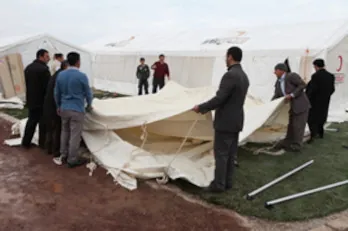
Homelessness remains an issue of deep concern even as we advance into the 21st century. The American dream is a distant one for about 2.3 million to 3.5 million Americans who do not have a place that they can call home, to sleep in the night. Without a permanent roof over their heads, these people seek refuge in various places such as homeless shelters while the less fortunate ones are forced to spend their night in public places that are unfit to sleep in.
Homelessness in America – The Definition
Homelessness can be defined as the lack of a permanent, safe and affordable night-time residence. The statistics of homelessness in America is truly staggering considering that the country in question is one that is a great deal advanced, especially from the economical and technological standpoint, perhaps far more than most other countries of the world. The exact statistics on homelessness in America is difficult to ascertain, as the precise number of people who experience homelessness keep changing. According to USA Today, in a recent estimate, about 1.6 million people lived in emergency shelters or transitional housing.
In a study conducted in 2007, The National Law Center on Homelessness and Poverty estimates the annual homelessness in America to be approximately 3.5 million people, of which 1.35 million are children. Among the homeless population, the number of homeless families with children is the fastest growing section. In a survey conducted among 23 cities by the U.S. Conference of Mayors in 2007, it was found that 23% of the homeless population was families with children. From estimates of different studies conducted over the years, it is an undeniable fact that the rate of homelessness in America has only increased steadily over the years. Sadly, the recent recession has added to it. According to The National Alliance to End Homelessness, over 1.5 million people will be rendered homeless in the next two years due to recession. Out of 25 cities surveyed by the U.S. Conference of Mayors in 2008, there has been an average increase of 12% of homelessness since 2007.
Facts About Homelessness In America
Homelessness in America is more prevalent in urban America with 71% living in central cities, 21% in suburbs, and 9% in rural areas. But homeless people who live in the rural areas suffer much as there are lesser shelter systems and temporary residence facilities located in rural areas than there are in urban areas. It has also been found that the duration of stay in transitional housing, before a homeless family can move to permanent housing, has increased over the years. While in the 1990s, the average stay of a homeless family in a New York shelter was five months, it has now increased to 5.7 months.
Some recent surveys on this proportion state that the transition period has even gone up to almost a year, which means, the period of homelessness in America is more stretched than it was previously. To tackle the problem of homelessness in America, the Government, organizations and groups need to address interlinked issues such as lack of adequate housing, poverty and unemployment which are the most common causes for homelessness. With increasing population and an economic downturn looming large in the future, it is imperative that policies and strategies are formulated that treat these crucial issues in a holistic and sustainable manner, so as to reach permanent and lasting solutions to the homelessness in America.
2011 Update
According to recent data, in 2009, there were approximately 643,067 homeless individuals and in 2011 there were about 636,017 homeless individuals. In other words, in 2011, for every 10,000 individuals ,there were about 21 homeless individuals. From 2009 to 2011, America’s homeless population dropped by one percent or approximately 7,000 people.
The biggest drop was for the homeless veterans population which declined by eleven percent. In 2009, there were 75,609 homeless veterans and in 2011, there was 67,495. For every 10,000 veterans, there were about 31 homeless veterans in 2011.
Recurring homelessness dropped by three percent in 2011 from 2009. The chronic homeless population dropped by about thirteen percent since 2007. This decrease is due to an rise in the quantity of supportive permanent housing beds which increased by about 78,000 beds.
Most of the homeless people that were counted resided in transitional housing or emergency shelters. Nearly four in ten were not sheltered. This population actually increased by two percent from 239,759 individuals in 2009 to 243,701 individuals in 2011.
The number of homeless families dropped by one percent across the country, but increased by twenty percent or more for eleven states. Even though the homeless population decreased nationwide, it increased for twenty-four states and also for the District of Columbia.


If you know of any shelters, soup kitchens, low income housing or any other helpful information we can provide please let us know.
Just add the information below. We won’t publish your comment, and we will list any legitimate resource suggested in our directory.
We don’t take donations and we never charge for our homeless shelters, soup kitchens, or low income housing resources. Our service is free.
If you would provide a back link to our web site, bookmark our site, like us on Facebook, Tweet, or Google +1 us, or simply tell people about us and help spread the word, we would be most grateful.
Thank you.